
Car Accidents
Should Bronx-Area Crash Victims Contact an Automotive Accident Attorney? A Fact-First Consultation Guide
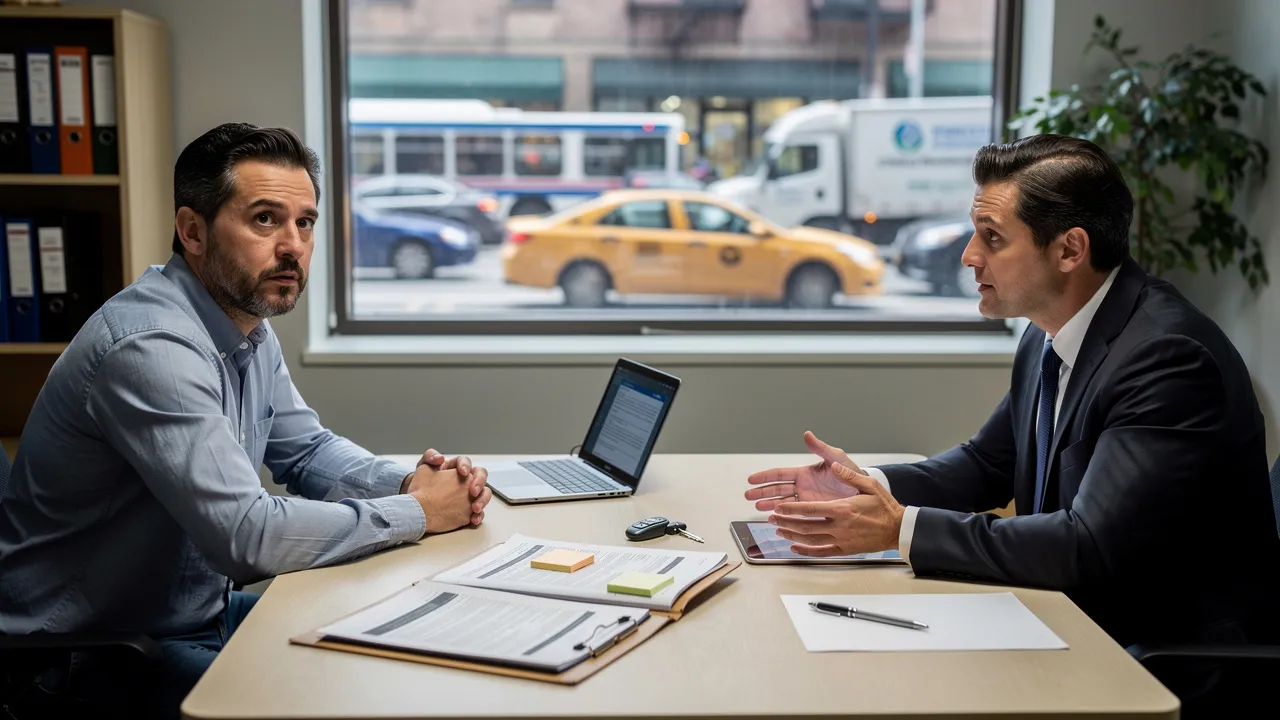
Start by choosing the crash route, not predicting the case
After a Bronx-area crash, begin with a route question rather than a prediction about who will win. The route changes with your role and the vehicle or organization connected to the event: you may have been driving, riding in a private car, walking, using a rideshare, traveling in a taxi or bus, or involved in a truck collision. That distinction helps identify which insurer, records, and timing questions deserve attention first.
Create a route card with four fields: your role, the vehicle or public connection, the insurance and notice information, and the missing records or dates. The card does not decide liability, case value, eligibility, or outcome. It gives a consultation a practical starting point without requiring you to assemble a complete legal file first.
Choose the route card that matches the event:
- Driver or private-car passenger: start with the vehicle you occupied, its insurer, and your own or household policy information.
- Pedestrian: identify the vehicle that struck you and the insurer information connected to it.
- Bus passenger: compare the passenger’s policy, a household member’s policy, and the bus insurer when neither the passenger nor a household member has automobile insurance.
- Rideshare or taxi passenger: record the vehicle, operator, company or platform information, insurer details, and the records that identify the trip.
- Public-corporation connection: preserve every name in the report or paperwork and flag the connection before assuming an ordinary private-vehicle route.
The card is a routing aid, not a conclusion about your claim. If the role, insurer, public connection, or timing remains unclear, those unresolved fields show why a conversation with an automotive accident attorney may be a useful next step.
Use route cards for drivers, passengers, pedestrians, and bus occupants
Use the route card as a short decision tree. The first answer identifies the branch; the remaining answers show which records and timing questions belong with it. None of these branches establishes eligibility, fault, compensation, or outcome.
-
Identify your role. Mark driver, private-car passenger, pedestrian, bus passenger, rideshare passenger, or taxi passenger. Write the crash date and location beside that role. If more than one role or vehicle is involved, keep each route separate rather than combining them.
-
Trace the vehicle connection. For someone in a vehicle, record the vehicle occupied and the insurer connected to it. For a pedestrian, record the vehicle that struck you. For a bus passenger, list the passenger policy, any household policy, and the bus insurer information available. Unknown insurer details belong in the card as an open question.
-
Add the special vehicle branch. Note whether the event involved a truck, commercial van, delivery vehicle, tractor-trailer, rideshare, taxi, uninsured driver, or unidentified driver. Record the vehicle and operator information without deciding who caused the collision. The added vehicle facts tell you which records and participants should be identified.
-
Flag a public-corporation connection. If a public corporation is named in an accident report, vehicle record, ticket, or insurance document, copy that name and preserve the document. Do not assume the same timing question applies as in a private-vehicle matter.
-
Place dates beside proof. Record the crash date, any notice date, the date an insurer sent a form, medical-care dates, and the dates connected to witnesses or newly identified parties. Put each date beside the document or memory supporting it. A missing date remains an open route-card field.
The route-card decision is practical: a clearly identified role and vehicle may leave fewer routing questions, while an unclear insurer, public connection, or date creates a specific issue to raise. Put those unresolved fields at the top of the consultation file instead of filling them with assumptions.
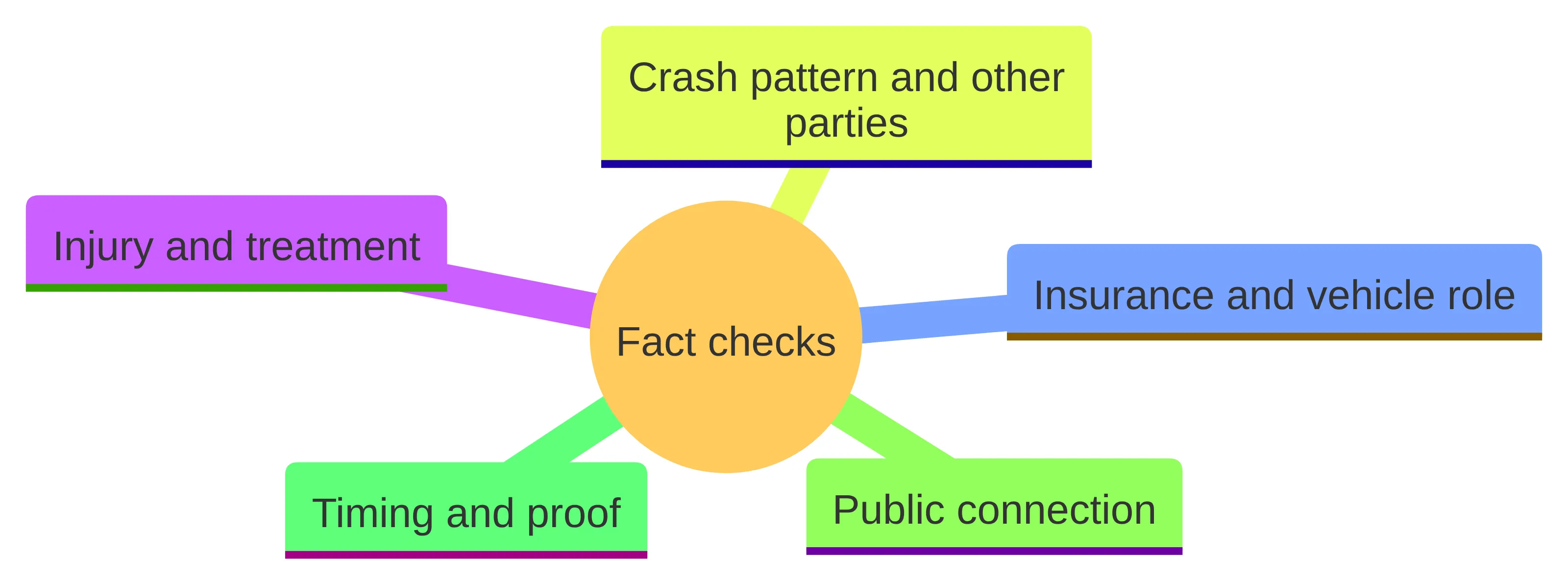
Apply the vehicle-role insurer branch early
The insurer branch on the route card is time-sensitive. New York guidance generally describes written notice to the applicable no-fault insurer as due as soon as reasonably practicable and no later than 30 calendar days after the crash, unless written proof provides a clear and reasonable justification for late filing. Treat that timing as a question requiring prompt attention, not as permission to wait.
For a New York crash, a person in a vehicle generally directs the no-fault question to that vehicle’s insurer, while a pedestrian generally looks to the insurer of the vehicle that struck them. For an injured bus passenger, coverage may come from the passenger’s policy, a household member’s policy, or—if neither has automobile insurance—the bus insurer. The first route-card entry is therefore your role and the vehicle connected to it.
Put these route-card details beside the insurer branch:
- The crash date, time, and location.
- Your role and the vehicle you occupied or that struck you.
- Each insurer you know, including your own insurer and the vehicle insurer.
- Whether written notice was given and the date connected to it.
- Whether an NF-2 form or another information request arrived.
The cited New York guidance says an insurer must send an NF-2 within five business days after notice and, if there is no response within 30 days of the first mailing, send a second NF-2 within 10 calendar days. Keep every envelope, email, form, and confirmation with the insurer branch. If the policy or insurer is unclear, mark that gap instead of guessing.
Keep the insurance route separate from the injury review
Once the route card identifies the likely insurance path, keep two tracks separate. The first track concerns no-fault benefits and the submission of medical or other listed expenses. The second track concerns the crash, the parties, the injuries, and the legal questions that remain after the insurance route is identified.
New York law defines basic economic loss as up to $50,000 per person, subject to statutory limitations, and includes listed medical and related treatment expenses. That statutory description is not a valuation of your case, a promise that you will receive that amount, or an answer to whether another claim exists. Keep the figure on the benefits track rather than treating it as a conclusion about the broader route.
Use two labeled tracks on the route card:
- Insurance route: Which policy or insurer connects to the role and vehicle? Was notice given? What form or request arrived? Which treatment or expense documents relate to that exchange?
- Case facts: What did each vehicle do? What injuries and limitations followed? Who may know about the collision? Is there a public, commercial, rideshare, taxi, or unidentified-driver connection?
This layout keeps a missing insurer name or form from becoming a conclusion about the whole matter. Bring both tracks to the consultation, even when one is nearly complete and the other has several gaps.
Let the vehicle and crash pattern change the questions
The vehicle and crash pattern should change the questions you prepare, even though neither category proves fault or determines the value of an injury claim. A rear-end collision raises a different factual description from a left-turn collision. A truck’s blind-spot or turning movement calls for different vehicle and witness details from a collision involving a private car. A rideshare, taxi, or bus passenger may need to identify both the trip and the vehicle involved.
At The Law Offices of Evan W. Kohn, we handle car-accident matters involving rear-end, intersection, left-turn, hit-and-run, drunk-driver, distracted-driver, uninsured-driver, and injured-passenger cases. We handle truck-accident cases involving blind-spot and turning crashes, box trucks, delivery trucks, commercial vans, 18-wheelers, and tractor-trailers. We offer free consultations for passengers involved in rideshare or taxi accidents. These are descriptions of the matters we handle; they are not conclusions about your particular facts.
Use the crash pattern to build a focused question list:
- Rear-end or intersection collision: What traffic signal, lane position, turn, impact point, and vehicle movement did you observe?
- Truck or commercial-vehicle collision: What type of truck or van was involved, where was the impact, and what identifying information appears in the report or photographs?
- Rideshare or taxi collision: Were you a passenger, driver, pedestrian, or occupant of another vehicle, and do you have a trip receipt, vehicle number, or driver information?
- Hit-and-run or uninsured-driver collision: What information did police, witnesses, cameras, or the accident report preserve?
Do not discard a potential consultation because you cannot name every party. Bring the partial information, identify what is missing, and let the open questions guide the discussion.
Flag public-entity involvement before assuming an ordinary deadline
A possible New York public-corporation connection can change the timing questions that need review. The connection may arise from the identity of a vehicle owner or operator or another public entity named in the accident materials. You do not need to decide whether the entity is legally responsible before flagging its identity.
For a potential claim against a New York public corporation, a court considering an extension looks at whether the corporation, its attorney, or its insurer learned the essential facts within the statutory period or a reasonable time afterward. New York law also lists factors that may matter to an extension, including incapacity, infancy, death, certain settlement representations, and an excusable mistake about the public corporation’s identity. Those factors do not create an automatic extension and do not replace prompt legal review.
Gather the public-entity clues you already have:
- The name printed on a bus, truck, police report, ticket, or insurance document.
- The location and description of the event.
- The date you notified any agency, insurer, or representative.
- The names and contact details of witnesses who saw the event or its immediate aftermath.
- Any letter, form, incident number, or communication from a public body.
Do not calculate a public-entity deadline from a general internet rule or from the date you first felt ready to act. Put the public name, crash date, and every notice date together and raise them promptly in the consultation.
Build a route-card file from the records already available
Build the consultation file around the route card rather than around a general chronology. Start with records already in your possession, mark what is missing, and keep the role, vehicle, insurer, public connection, and dates visible on the first page. Do not delay a time-sensitive conversation while trying to create a perfect packet.
Use five route-card folders or digital sections:
- Role and vehicle: your role, the vehicle occupied or involved, vehicle information, photographs, videos, and the location and date of the crash.
- Insurer and notice: policy information, insurer letters, no-fault notices, NF-2 forms, emails, claim numbers, and proof of when documents were sent or received.
- Special connection: rideshare, taxi, bus, truck, commercial-vehicle, uninsured-driver, unidentified-driver, or public-corporation information shown in the records.
- Medical effects: emergency-care information, provider names, treatment dates, bills, prescriptions, referrals, restrictions, and effects on work or daily activities.
- People and timing: witness details, police or accident reports, notice dates, vehicle owners or operators identified in the records, and a dated account of what you remember.
For a crash involving a New York-registered vehicle, the New York DMV says the three-digit insurer code on the accident report can identify the insurer through the free insurance-code search. Save the code and the result with the accident records rather than copying only a company name into your notes.
At The Law Offices of Evan W. Kohn, we investigate cases by gathering police reports, photographs, witness statements, and medical records. That describes our stated investigation process; it does not mean you must obtain every record before speaking with us. Bring what you have, label what you do not have, and explain which documents are still being requested.
Match each record gap to its route-card question
Use each missing record to select the next route-card question. This keeps the consultation focused on the branch that remains unclear instead of turning the meeting into a general retelling of the crash.
Use a route-card note like this:
- Role or vehicle unclear: Which role applies, which vehicle was occupied or involved, and what document identifies it?
- Vehicle insurer unknown: What policy information is available, and which insurer is connected to the vehicle?
- Pedestrian branch: Which vehicle struck the pedestrian, and what insurer or report identifies that vehicle?
- Bus-passenger branch: Is there a passenger policy, a household policy, or bus-insurer information to review?
- Rideshare or taxi branch: What identifies the vehicle, operator, company or platform, trip, and insurer?
- Public-corporation branch: What public corporation is named in the records, and which date or notice is connected to it?
- Notice or form gap: What notice, NF-2 form, mailing, email, or confirmation exists, and on what date?
- Medical or witness gap: Which provider, treatment date, witness, or record is missing from the route card?
- Crash sequence gap: Which movement, lane, impact point, or vehicle position remains unknown?
Write "unknown" when a route-card field cannot yet be answered. Do not fill a blank with an assumption. Bring the questions even if the file is small; a short packet that separates confirmed details from gaps gives the attorney a clearer starting point.
Use three labels on the route card: recorded, recalled, and unknown. A recorded detail appears in a report, form, photograph, message, or other document in your possession. A recalled detail comes from your own memory or from what another person told you. An unknown detail has not been established from the materials currently available. Keeping those labels separate prevents a remembered detail from appearing to have documentary support and prevents an empty field from being treated as an answer.
A short timing map can sit beside the labels. Put the crash date first, followed by the dates of medical care, notice to an insurer, receipt of an insurance form, contact with a public body, identification of a witness, and any later request for records. If a date is approximate, mark it as approximate. If two documents show different dates, preserve both dates and identify the disagreement rather than selecting one because it makes the timeline easier to read. The point of the map is to show which timing questions remain open.
The same approach applies to vehicle and party information. Record the name exactly as it appears on the report or document, then note whether the connection is to the vehicle, driver, owner, operator, company, platform, public corporation, or insurer. If a rideshare, taxi, bus, truck, or commercial van is involved, keep the vehicle description and the organization information in separate fields. That separation helps avoid treating the name of an operator, company, or insurer as proof that the same party has the same legal role.
When accounts differ, keep the difference visible. A police report, an insurer letter, a witness account, and your own recollection may describe the same event from different positions or at different times. The route card can state, for example, that the impact location is recorded one way in a document and recalled differently, or that the insurer name is present but the policy relationship is unclear. A discrepancy is itself a question for the consultation; it does not need to be resolved by guessing before the conversation.
Turn each gap into one narrow question. Instead of writing only "insurance missing," identify whether the missing item is the vehicle policy, your own policy, a household policy, the insurer’s address, a claim number, proof of notice, or a form received by mail or email. Instead of writing only "medical records missing," identify the provider, treatment date, bill, referral, restriction, or other item that is absent. Narrow questions make it easier to explain what has already been checked and what still needs attention.
The first page can then carry a compact summary: your role, the crash date and location, the vehicle or organization connection, the injury and treatment status, the insurer information, and the two or three gaps that could affect the next discussion. The remaining records can follow in the same order as the route card. This arrangement keeps the consultation focused even when the packet is incomplete, while leaving room for the attorney to distinguish a known fact, a disputed account, and a question that requires further review.
Treat official rules and firm descriptions as different kinds of information
New York legal rules and a law office’s service description answer different questions. A statute or state-agency guidance describes a rule, procedure, or insurance requirement. A business page describes the types of matters the office handles and the access options it offers. Neither category, by itself, decides what your individual facts mean.
The New York rules and guidance discussed here address no-fault notice, the vehicle or insurer connection for certain claims, basic economic loss, insurer forms, and public-corporation notice questions. Those rules support the timing and route checks in this guide. They do not supply a case valuation, determine liability, or tell you whether every possible claim is available.
At The Law Offices of Evan W. Kohn, we handle the listed car-accident patterns and driver or passenger situations, as well as the listed truck-accident categories. We offer free consultations and operate 24/7. We can arrange home or hospital visits for clients who cannot travel. These statements describe our services and access options; they do not promise that a particular matter meets any legal requirement or will produce a particular result.
Keep the categories separate in your notes:
- Put a rule question under New York procedure or insurance.
- Put a service-fit question under what we handle.
- Put an outcome question under facts that require individual review.
That distinction lets you ask for help without treating a general rule as a case answer or treating a service description as proof that your claim will succeed.
To keep the categories usable after the consultation, label each important note with its source type. Mark a statute or state-agency instruction as a rule source, and record the jurisdiction, the question it addresses, and whether the information is time-sensitive. Mark an accident report, policy page, insurer letter, form, photograph, or witness account as a case record, and note the date and the specific fact the record shows. Mark a law-office page as a firm description, and record whether it describes a case category, a consultation option, a service area, or an access arrangement. This labeling prevents a business description from being mistaken for legal authority and prevents a general rule from being mistaken for proof of a fact in your accident.
When two notes appear to point in different directions, preserve both instead of choosing the version that makes the route look simpler. An insurer name found through an accident-report code may help identify a company, but the available records may still leave the vehicle or policy relationship unclear. A public-corporation name in a report may explain why a notice question needs attention, but it does not answer that question by itself. An NF-2 mailing may show that a form was sent, while leaving other insurance or record questions open. Write the conflict as a question for review rather than converting one document into a conclusion about the entire matter.
A useful four-line note for each unresolved issue is:
- Question: What rule, route, or service issue needs an answer?
- Support: Which document, official guidance, or firm description prompted the question?
- Gap: What does that material not establish about your role, vehicle, insurer, party, date, or treatment?
- Consultation prompt: What should be reviewed using the complete facts and available records?
For example, a note might identify the vehicle role and the insurer information shown in an accident report, then state that the policy relationship or notice date remains unknown. A public-entity note might preserve the entity’s name, the crash date, and any notice record while asking which timing issues require individual review. The note does not need to answer the legal question before the consultation; its purpose is to keep the source, fact, and gap visible together.
Because the approved New York timing and insurance statements are date-sensitive, keep the retrieval date beside them and treat them as general information for the stated jurisdiction, not as permanent instructions for every crash. If the consultation occurs after a delay or the facts involve a different party or route, identify that change explicitly. A concise source-and-gap record gives the attorney a clearer starting point than a copied rule standing alone.
Match the consultation request to access needs and location
The consultation location and access format should fit the practical facts of your recovery. A crash in the Bronx may involve a driver or passenger who lives elsewhere in New York City, Westchester, Putnam, Rockland, Nassau, or New Jersey. At The Law Offices of Evan W. Kohn, we serve clients in all five boroughs, Westchester, Putnam, Rockland, Nassau, and New Jersey.
Our Bronx office is at 2000 White Plains Road, Bronx, New York 10462. At The Law Offices of Evan W. Kohn, we offer free consultations and operate 24/7. Ask which consultation format fits your treatment, mobility, or transportation limits. These access considerations matter when treatment, hospitalization, work schedules, or transportation make an office visit difficult. They do not change the need to provide the crash date, vehicle information, treatment details, insurance records, and unanswered questions.
Choose the access information that helps explain your situation:
- Where you live and where the crash occurred.
- Whether you can travel to the Bronx office.
- Whether you are receiving treatment at home or in a hospital.
- Whether another person needs to help provide records or describe the event.
- Whether the matter involves a car, truck, rideshare, taxi, bus, pedestrian, or passenger role.
Use the service-area information to decide whether contacting us is geographically practical. Use the factual summary to decide what the consultation must address. Location and access can make a conversation easier to arrange, but neither one answers the legal questions created by the crash.
Know what the first consultation cannot decide
The first consultation cannot decide every issue in an automotive accident matter. It can provide a structured place to identify the questions that need records, witness information, insurance documents, or additional legal analysis. Treat the conversation as an initial review of the facts you can provide, not as a substitute for completing the investigation.
Keep these boundaries in mind:
- A crash description does not by itself establish who was legally responsible.
- An injury diagnosis does not by itself establish the available claim route or the value of a case.
- An insurance policy name does not by itself prove which benefits or claims apply.
- A 30-day no-fault notice rule does not answer every deadline connected to every party or legal route.
- A public-entity name does not by itself establish responsibility, and a possible extension factor does not guarantee more time.
- A service category on a law office’s website does not guarantee eligibility, representation, compensation, or success.
- Missing records do not justify inventing details, and a complete packet does not eliminate the need for fact-specific review.
The most useful result of the first conversation may be a clearer list of next questions: which insurer needs attention, which dates require urgent review, which records should be obtained, which people may have relevant information, and whether a public or commercial party changes the analysis. Keep those questions visible after the conversation so that a general explanation is not mistaken for a final determination.
Map the crash by role and vehicle
A role-and-vehicle route card starts the consultation with the facts that can change the insurance path. Its first fields identify the person’s role—driver, passenger, pedestrian, or bus passenger—and the vehicle connection: private vehicle, rideshare or taxi, truck, unidentified vehicle, or a possible public corporation.
Those fields frame the first insurance question without deciding coverage. For a person in a New York vehicle crash, identify the insurer for the vehicle occupied; for a pedestrian, identify the insurer for the vehicle that struck them. For a bus passenger, note whether the passenger or a household member has an automobile policy, because the bus insurer may be relevant if neither has one. Mark unresolved answers as unknown.
A second line records the crash pattern and the facts that may change the questions: rear-end, intersection, left-turn, hit-and-run, drunk- or distracted-driver, uninsured-driver, blind-spot, turning, box-truck, delivery-truck, commercial-van, or 18-wheeler/tractor-trailer. For a New York-registered vehicle, the DMV says the three-digit insurer code on the accident report can identify the insurer through the free insurance-code search. A possible public-corporation connection belongs on its own line because notice issues may require separate review.
The supporting file can focus on records that fill those fields: the accident report, insurer information, medical records, photographs, and witness details. The Law Offices of Evan W. Kohn investigates cases by gathering police reports, photographs, witness statements, and medical records. A consultation still requires review of the individual facts, parties, available routes, and time-sensitive requirements.
Request a free consultation from The Law Offices of Evan W. Kohn.
Questions about automotive crash routes and consultations
What should I gather before consulting an automotive accident attorney?
Before consulting an attorney, gather details about the accident, including the crash date, location, your role (driver, passenger, etc.), insurance information, medical treatment records, and any witness details. This information will help facilitate a more productive conversation.
Can I receive a consultation if I am unable to travel?
Yes, The Law Offices of Evan W. Kohn can arrange home or hospital visits for clients who are unable to travel due to their injuries.
What should I do if a public entity is involved in my accident?
If a public entity is involved, it’s important to identify it early, as this may affect the deadlines and procedures for filing a claim. Gather any relevant information about the public entity and mention it during your consultation.
Hurt like this?
We handle Car Accidents cases in the Bronx.
Evan W. Kohn, Esq. — more than 35 years of Bronx personal-injury practice. Reading about it only goes so far; a free consultation tells you what actually applies to your case.