
Car Accidents
Best Personal Injury Law Firms Near Me: How to Choose a Bronx-Area Firm After a Crash

Turn the verification ledger into a post-consultation scorecard
After a Bronx-area crash, a firm’s search placement or advertisement cannot tell you how its answers fit your facts. The useful decision point comes after contact: record what each office actually answers, then test those answers against the accident details, records, and practical limits you can describe. The result is a documented fit decision rather than a label.
The verification ledger should capture five post-contact entries for each office:
- Accident and location fit: What the office says about the vehicle involved, your role, and the place connected to the claim.
- Access and communication: How you can participate while dealing with treatment, work, mobility limits, or family responsibilities.
- Consultation terms: Whether the meeting is described as free or no-obligation and what is said about when fees would apply.
- Working questions: What the office asks about insurers, medical treatment, lost income, photographs, witness information, police reports, and other records.
- Open items: Questions about timing, coverage, or the next step that remain unanswered after the conversation.
Label each entry confirmed, unclear, or follow-up needed. That label records the quality of the answer, not the strength or value of a claim. It also prevents a confident-sounding advertisement from filling gaps that only a conversation and relevant records can address.
A nearby personal injury firm should earn your consideration through observable fit rather than a label such as best. Distance can matter in the Bronx and across New York City, but distance alone does not tell you whether the practice handles your collision, communicates in a workable way, or can address the questions created by your injuries and insurance position.
The comparison method in this guide is deliberately practical. You will create a short verification ledger, check location and case scope, test access, separate business descriptions from legal rules, prepare a compact packet, and put timing questions first when they may affect your options. That method helps you choose what to ask instead of trying to decide a claim from advertising.
Build a verification ledger before comparing firms
A verification ledger is a one-page comparison sheet that keeps each firm’s answer beside the question it is meant to answer. Use the same headings for every practice you consider so a polished website does not receive more weight than a clear, relevant response.
Create these columns:
- Firm name and location
- Accident category and your role in the crash
- Stated service area
- Access options and hours
- Consultation terms and fee questions
- Insurance and evidence questions to raise
- Timing questions that remain open
- Answer received, date, and follow-up needed
Write facts separately from impressions. For example, a statement that a firm handles truck accidents belongs in the case-scope column. A feeling that a conversation was rushed belongs in your notes, but it should not replace a direct answer about who will communicate with you or what information the firm needs.
Keep a blank space for questions the firm cannot answer immediately. An unresolved point is useful information. It tells you what must be clarified before you decide whether the practice fits.
A consistent ledger lets you compare firms against the same practical criteria instead of switching standards from one search result to the next. Record the exact answer when a question concerns location, accident type, access, fees, insurer contact, records, or timing. Avoid turning a general statement into a promise about your individual matter.
Use a simple status for each item:
- Confirmed by a direct answer or clearly stated service information.
- Unclear and requiring a follow-up question.
- Outside the firm’s stated scope or not workable for your circumstances.
This format also helps if you are injured, tired, or speaking with several offices. You do not need to remember every answer. You need a short record of what was addressed, what remains uncertain, and which practical boundary matters most to you.
After the first contact, turn that record into a post-contact scorecard. For each important question, note whether the answer was complete, specific to the facts you described, and understandable without relying on a promotional phrase. Also record whether the office explained who would handle follow-up communication, what information it still needed, and how fee terms would be addressed before you chose to engage the attorney. If a potential conflict or other limitation is raised, record the explanation and the next step rather than treating the issue as resolved.
Evaluate follow-through separately from the quality of the first conversation. If the office says it will provide an answer, request a record, or clarify a fee or process point, note whether that follow-up occurs and when. Do not treat a quick or confident response as proof that the legal issue has been decided. An office may reasonably need medical records, an insurer communication, or other facts before answering a timing or coverage question. In that situation, the useful comparison is whether it clearly identifies what is missing, explains the question that remains open, and gives you a practical way to continue the discussion.
Use the same scorecard for every office you contact. Base the comparison on observed answers and follow-through, not on a predicted claim result. This makes the final choice more defensible when two firms appear similar in distance or stated practice scope but differ in how clearly they explain the next step.
Test whether the geographic fit is real
Geographic fit means more than finding an office address in a search result. The relevant question is whether the firm’s stated service area covers the places that matter to your crash.
A Bronx crash may connect to more than one place. You could live in another borough, work in Westchester, receive treatment near the accident, or need communication from home while you recover. Put the relevant locations in your ledger rather than assuming that the nearest map result answers the service-area question.
Ask directly:
- Does the firm handle matters connected to the borough or county where the collision occurred?
- Does it work with clients who live or receive treatment elsewhere?
- Which location should appear in your notes for future communication?
The goal is not to favor a broad service-area statement by itself. The goal is to see whether the stated area matches the places that matter in your situation.
Your location check should end with a usable answer, not a larger list of counties. Write the specific area connected to your crash, then record whether the firm’s stated service area includes it. If the answer is unclear, place that uncertainty in the follow-up column and raise it before relying on the firm for the next step.
A practice can be geographically close and still be inconvenient if you cannot travel, reach the office, or communicate through the available arrangements. Location is therefore one part of fit. Pair it with access, case scope, and the practical needs created by your injuries.
Match the crash to the firm’s stated case scope
Your crash category should match the firm’s stated case scope before you spend time comparing less central features. The Law Offices of Evan W. Kohn states that we handle rear-end, intersection and left-turn, hit-and-run, drunk- or distracted-driver, uninsured-driver, and injured-passenger car-accident cases. We also help people injured by commercial trucks, including in blind-spot and turning crashes, and offer free consultations for passengers involved in rideshare or taxi accidents.
Describe the collision in ordinary factual terms rather than choosing a label that sounds legally favorable. Note whether you were driving, riding as a passenger, walking, or using a rideshare or taxi. Record whether a truck, commercial vehicle, uninsured driver, hit-and-run, intersection movement, or alleged distraction is part of the known facts.
Then ask:
- Does the firm handle this accident category as you described it?
- Does your role in the collision change which insurance or records questions should be raised?
- What basic information should you provide first?
A matching category does not decide the merits of a claim. It tells you that the firm’s stated work includes the type of event you need to discuss.
Truck and rideshare crashes deserve a precise scope check because your role and the vehicles involved may create different questions for the first discussion. The Law Offices of Evan W. Kohn states that we handle truck cases involving blind-spot and turning crashes and offer free consultations for rideshare or taxi accident passengers.
Use those statements as a reason to describe the facts carefully, not as a conclusion about insurance responsibility or case value. Bring the names of the vehicles, drivers, companies, and insurers if you have them. If you do not know a detail, mark it as unknown rather than filling the gap with an assumption.
Audit access before choosing on distance alone
Access should fit your physical condition, schedule, preferred communication method, and ability to travel. Those arrangements may matter after a crash when treatment, pain, transportation, or work makes an office visit difficult. Put the access question in concrete terms:
- How can you make the first contact?
- What happens if you cannot travel to the office?
- Which communication method works while you are receiving treatment?
- Who should receive your updates and documents?
- How will you record questions that require a later answer?
A firm’s stated access option is a starting point for your ledger. You still need to ask how the arrangement would work for your circumstances and record the answer in plain language.
The Law Offices of Evan W. Kohn lists 2000 White Plains Road in the Bronx, and we state that home or hospital visits can be arranged for clients who cannot travel.
Use the address to understand the office location, not to decide that physical proximity settles every other issue. If you can travel, note whether the location is practical. If you cannot, write that limitation at the top of your access questions. A workable communication path can be more useful to you than a shorter trip that does not fit your condition.
Separate firm statements from legal authority
A firm’s stated services and New York legal rules answer different questions. A practice page can tell you what types of matters the firm handles, where it serves clients, and how it describes its access arrangements. It cannot, by itself, determine whether your injuries satisfy a statutory requirement, which insurer must respond, or what a claim may be worth.
The Law Offices of Evan W. Kohn states that we handle several car-accident categories, including injured-passenger cases. New York’s no-fault law, as described by the cited New York authority, provides first-party benefits for basic economic loss while restricting personal-injury lawsuits when the statutory serious-injury requirement is not met.
Keep these statements in separate ledger rows. The first concerns stated practice scope. The second concerns a legal framework that may affect a lawsuit. Neither row should be rewritten as a prediction about your case.
The statutory serious-injury question belongs in your legal-issues column, not in a self-assigned conclusion. The cited New York authority states that a plaintiff must establish a statutory serious injury to maintain a personal-injury lawsuit subject to the no-fault threshold.
Licari v. Elliott illustrates why the facts and records matter. The court concluded that the plaintiff did not meet the 90-day serious-injury standard after returning to work in 24 days and resuming his regular taxi-driving schedule.
That decision does not tell you how your injuries will be viewed. It does show why a firm should hear about treatment, work, daily activities, and the timing of changes rather than relying on the accident label alone. Add those facts to your questions without describing them as proof of a legal category.
Use the consultation to test the working process
A consultation should help you test whether the firm’s working process fits the facts you can provide and the questions you need answered. The selected consultation guide describes a complimentary meeting where you can discuss how the injury occurred and what treatment you received; it says fees are not owed unless you choose to engage the attorney. The Law Offices of Evan W. Kohn also states that we offer free, no-obligation consultations.
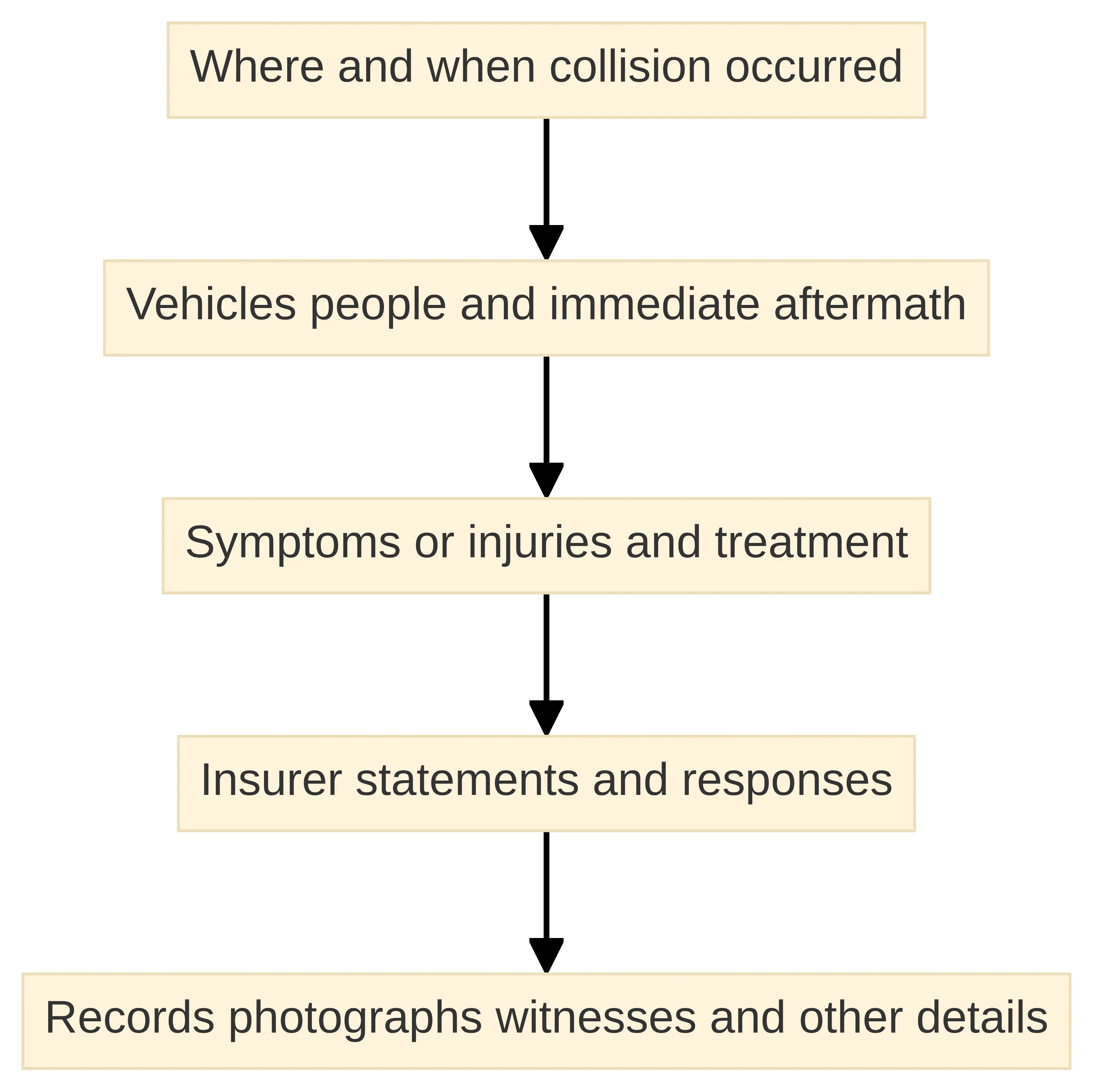
Use the meeting to explain the crash in sequence:
- Where and when the collision occurred.
- What you remember about the vehicles, people, and immediate aftermath.
- What symptoms or injuries you experienced and what treatment followed.
- What you have told insurers and what responses you received.
- What records, photographs, witnesses, or other details you can provide.
You do not need to turn the first conversation into a finished case theory. You do need to give a clear factual starting point and listen for the questions the firm asks in response.
Process questions can reveal whether the proposed working relationship is understandable and practical. The Law Offices of Evan W. Kohn states that we investigate cases by gathering police reports, photographs, witness statements, and medical records.
Ask questions such as:
- Which facts or records should you send first?
- How will information from the police report, witnesses, photographs, and medical records be organized?
- Who will communicate with you about open questions?
- How should you send updates about treatment, work, or insurer contact?
- What fee terms and scope should you understand before choosing to engage the attorney?
- Which questions cannot be answered until additional records are reviewed?
A clear process does not require a promise about the result. It requires a usable explanation of the next information, the next question, and the boundary around what has not yet been decided.
Bring a compact fact-and-record packet
A compact fact-and-record packet gives you a practical way to describe the crash without searching through scattered messages during the first conversation. Selected post-crash guidance recommends documenting the scene with photos, videos, witness contacts, and information about the other driver, vehicle, and insurance. The consultation guide recommends sharing basic details about the injury, how it occurred, and medical treatment.
Gather what is available in these groups:
- Crash facts: date, approximate time, location, travel direction, vehicles, people involved, and a short sequence of events.
- Scene information: photographs, videos, witness names and contact details, police information, and the other driver’s insurance details.
- Injury and treatment information: symptoms, providers, visits, diagnoses or instructions you received, and changes in daily activities.
- Insurance communications: policy information, claim details, letters, messages, call dates, and the names of representatives.
- Questions and gaps: details you do not know, records you have requested, and answers you need from a lawyer.
Do not delay a time-sensitive question while trying to create a perfect packet. Send or describe what you have, mark missing items clearly, and keep adding records as they become available.
Medical treatment and recordkeeping belong in the packet because selected guidance recommends prompt medical attention and explains that medical records can help document the connection between injuries and the crash.
Keep a simple dated list of appointments, instructions, symptoms, work changes, and communications related to treatment. Preserve copies of records and correspondence that you already have. The list is not a diagnosis and does not establish a legal result; it gives you and the firm a clearer sequence for the first discussion.
Put New York timing and coverage questions on the first call
New York timing should be treated as a question for the first legal discussion, not a date to calculate casually from a search result. The NYC Bar’s selected table lists three years from the accident date for a car-accident lawsuit, but exceptions and case-specific rules may affect a particular claim.
Write the accident date at the top of your ledger, then add every fact that could affect the timing question. Include the type of claim you are considering, the people or entities involved, the locations connected to the event, and any notice or insurance communication already received. Do not assume that the general table resolves every possible route.
New York no-fault benefits and a personal-injury lawsuit are not the same question. The cited New York authority describes no-fault law as providing first-party benefits for basic economic loss while restricting personal-injury lawsuits when serious injury has not been sustained. The same authority states that a plaintiff must establish a statutory serious injury for a lawsuit subject to that threshold.
Put these questions on your first call:
- What type of claim or benefit should be discussed first based on the facts you can provide?
- What does the serious-injury issue mean for the legal question being considered?
- Which medical, work, or daily-activity records may help explain the injury history?
- What date or event should be treated as a timing checkpoint?
The answers depend on the facts and the claim being evaluated. Use the legal discussion to identify which dates and records matter instead of deciding from the general rule alone.
Insurance communication should have its own ledger row. Selected guidance recommends promptly notifying the insurer and keeping dated records of communications, but the policy’s specific notice requirements should be checked.
Record the date and method of each notice, the policy or claim number, the representative’s name, and a short summary of what was said. Preserve letters, emails, portal messages, and requests for records. If an insurer has denied, delayed, or questioned something, copy the exact wording into your notes and ask what it means rather than paraphrasing it into a conclusion.
Escalate unresolved risk instead of waiting for a ranking
Unresolved risk deserves priority when the facts could affect timing, coverage, or the way an injury claim is evaluated. Mark the issue for prompt discussion if any of these circumstances apply:
- The accident date is approaching a possible deadline or you are unsure which date matters.
- An insurer has disputed, delayed, or limited a response.
- Your injuries, treatment, work restrictions, or daily-activity changes raise a serious-injury question.
- A government vehicle, agency, or other public connection may be involved.
- You do not know which driver, owner, insurer, or company should be included in the factual summary.
- Important records, witnesses, or photographs may be difficult to obtain.
The NYC Bar’s selected table lists three years for a car-accident lawsuit, while also allowing that exceptions and case-specific rules may affect a claim. New York no-fault authority separately addresses basic economic loss and the statutory serious-injury requirement. Insurance guidance recommends prompt notice and dated communication records, subject to policy-specific requirements.
Do not wait for a ranking to resolve one of these issues. Put the exact fact, date, document, or insurer statement in your ledger and bring it to the first legal discussion.
A risk list should preserve questions rather than turn uncertainty into a conclusion. Write the issue in a form that can be answered: Which date may control? What coverage response was received? Which records describe the injury? Is a public entity connected to the event? What information identifies the responsible vehicles or parties?
That approach helps you compare firms on their ability to engage with the actual problem. It also keeps you from choosing or rejecting a practice based on a prediction that no search result can establish.
Audit the answers after a Bronx-area consultation
After a consultation, audit the answers you received instead of treating the meeting itself as proof that the firm fits. Record what the firm explained about fees, who would communicate with you, how insurer communications would be handled, what evidence or medical records are still needed, and which timing questions remain unresolved.
For each topic, mark the answer clear, incomplete, or requiring case-specific legal guidance. If the discussion leaves questions about New York timing, no-fault coverage, the serious-injury threshold, a government entity, or disputed insurance, identify those questions before deciding what to do next. General information cannot resolve every claim-specific issue.
Use this post-consultation record to decide whether the conversation gave you enough information to continue with that firm or whether you need to compare other options. The decision rests on the answers and open issues you can identify, not on a ranking label or a prediction about the result of a claim.
Bring your prepared summary and the questions that matter most to your circumstances.
Questions to ask before requesting a Bronx-area consultation
What should I consider when choosing a personal injury law firm after a crash?
When selecting a personal injury law firm, consider whether the firm handles your specific type of accident, serves the area where the incident occurred, offers accessible communication options, and provides clear information about the consultation process without making promises about outcomes.
How can I verify if a law firm serves my area?
Check the firm’s stated service area against the location of your accident. Ensure they serve clients in the borough or county where the incident occurred and confirm if they can assist clients who live or receive treatment elsewhere.
What types of accidents does The Law Offices of Evan W. Kohn handle?
The Law Offices of Evan W. Kohn handles various types of accidents, including car accidents, truck accidents, construction accidents, and slip-and-fall incidents.
What should I prepare before my consultation with a personal injury lawyer?
Before your consultation, gather information about the accident, including details about the crash, any injuries sustained, medical treatment received, and communications with insurers. Having this information ready will help the lawyer assess your situation more effectively.
What are the consultation terms at The Law Offices of Evan W. Kohn?
The Law Offices of Evan W. Kohn offers free, no-obligation consultations and operates 24/7. They can also arrange home or hospital visits for clients who cannot travel.
What questions should I ask during my consultation with a personal injury lawyer?
During your consultation, ask about the firm’s experience with cases like yours, the process for handling your claim, what documentation is needed, and how communication will be managed throughout your case.
How does New York's no-fault law affect personal injury claims?
New York’s no-fault law provides first-party benefits for basic economic loss but restricts personal injury lawsuits unless a serious injury, as defined by law, is established. This means that not all injuries will qualify for a lawsuit.
Hurt like this?
We handle Car Accidents cases in the Bronx.
Evan W. Kohn, Esq. — more than 35 years of Bronx personal-injury practice. Reading about it only goes so far; a free consultation tells you what actually applies to your case.